
An oil painting may need professional cleaning when its colours appear dull, dirt has built up on the surface, or details are becoming difficult to see. Dust, smoke residue, grime, and ageing varnish can all affect how a painting looks.
However, not every change in appearance means a painting needs cleaning. Some changes result from natural ageing, while others indicate damage that requires conservation treatment.
Professional oil painting cleaning helps remove suitable surface deposits while protecting the original artwork. The right approach depends on the painting’s age, materials, condition, and previous restoration work.
At Barnard Oil Painting Restoration, we understand that every painting is different. Whether you own a family heirloom, an inherited artwork, or a treasured piece from your collection, recognising the warning signs can help you protect it.
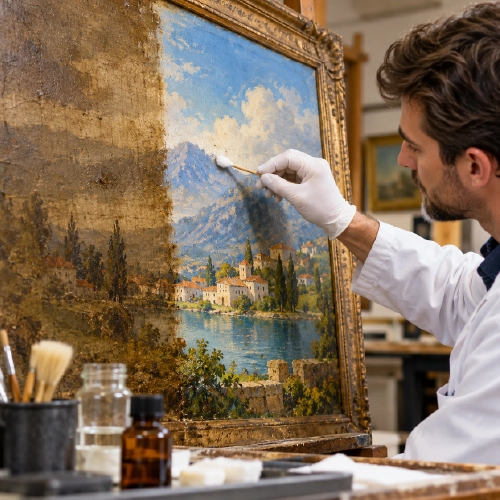
Not sure whether your painting needs attention? Here are seven signs worth investigating.
Have you noticed that your painting no longer looks as vibrant as you remember?
Over time, dirt and grime can settle on the surface. This layer may reduce the contrast between colours and make the entire painting appear darker.
Professional cleaning may reveal details that have become difficult to see. However, results depend on whether the discolouration is on the surface, within the varnish, or in the paint itself.
Dust is one of the most common problems affecting displayed oil paintings.
Textured paintings are especially vulnerable to visible dirt accumulation because dust can settle in raised areas and brushstrokes.
Avoid wiping the surface with a damp cloth. Loose or unstable paint can be damaged even by gentle handling.
Does your painting have a yellowish tint?
Older varnish coatings can become discoloured as they age. This may change the appearance of the entire painting, particularly in lighter areas.
However, yellowing does not automatically mean the varnish should be removed.
A professional must assess the coating, underlying paint, and potential risks before recommending treatment.
Cleaning and varnish removal are different procedures, and some paintings may not be suitable for either.
Oil paintings often contain subtle details within shadows and darker colours.
You might notice that:
Background details are less visible.
Dark clothing appears almost black.
Landscapes have lost some depth.
Fine brushwork is harder to appreciate.
Professional oil painting cleaning may improve visibility when surface deposits are responsible.
A painting may develop a cloudy or uneven appearance for several reasons.
Surface deposits, altered varnish, moisture exposure, and previous restoration materials can all affect its appearance.
In some cases, the problem may involve more than dirt.
If the surface looks cloudy, avoid applying oils, furniture polish, or household products to make it shine.
These products can create additional problems and complicate future conservation work.
Paintings displayed near fireplaces, kitchens, or areas exposed to smoke may collect airborne residues.
These deposits can gradually change the artwork’s appearance.
Smoke-related contamination can be particularly noticeable on light-coloured paintings.
However, removing these residues safely requires an understanding of the painting’s materials and condition.
What works on one painting may damage another.
Some paintings remain on the same wall for decades.
Because changes happen slowly, owners may not notice gradual deterioration.
An older painting does not necessarily need cleaning simply because of its age. However, a professional condition assessment can help identify dirt accumulation, unstable paint, or other concerns.
This is especially worthwhile for valuable or sentimental artwork.
Several everyday environmental factors contribute to surface contamination.
Household dust: Airborne particles settle on exposed surfaces, including paintings.
Smoke and airborne pollutants: Residues from cooking, fireplaces, and other sources may accumulate over time.
Handling: Touching the painted surface can transfer oils and contaminants.
Environmental conditions: Changes in temperature and humidity can affect the materials used to create a painting.
Ageing varnish: Some varnishes discolour over time, making paintings appear dirty even when the surface is relatively clean.
Understanding the cause is important because different problems require different treatments.
A painting with surface dust may need a very different approach from one affected by discoloured varnish or unstable paint.
Professional cleaning can sometimes make a remarkable difference to an oil painting’s appearance.
When dirt and surface deposits obscure the artwork, their careful removal may improve colour clarity, contrast, and detail.
However, cleaning cannot reverse every form of deterioration.
For example, pigments that have permanently changed or faded cannot simply be restored through surface cleaning.
Likewise, discoloured varnish may require separate treatment, while cracking or flaking paint may need stabilisation before any cleaning takes place.
The goal of professional conservation is not to make an old painting look brand new.
It is to preserve the original artwork while addressing problems that can be treated safely.
Many painting owners search online for ways to clean an oil painting at home.
Unfortunately, some commonly suggested methods can cause permanent damage.
Household products such as soap, water, alcohol, cleaning sprays, and furniture polish are not suitable general-purpose solutions for valuable oil paintings.
They may:
Disturb sensitive paint layers.
Leave unwanted residues.
Affect existing varnish.
Damage fragile surfaces.
Make future restoration more difficult.
Even gentle rubbing can remove loose paint or damage delicate textures.
If you suspect your painting is dirty, the safest first step is to have its condition assessed.
Avoid experimenting with cleaning products on an original oil painting.
Professional oil painting cleaning is a controlled conservation process rather than ordinary household cleaning.
At Barnard Oil Painting Restoration, treatment decisions depend on the condition and needs of the individual artwork.
The first step is to examine the painting.
Important considerations include the stability of the paint, the condition of the canvas or board, existing varnish, and signs of previous restoration.
Not all discolouration comes from surface dirt.
A painting may have accumulated grime, developed an altered varnish coating, or experienced changes within its original materials.
Identifying the cause helps determine whether cleaning is appropriate.
Where cleaning is considered safe, appropriate methods can be tested carefully.
The aim is to determine how surface deposits respond without unnecessarily affecting original materials.
Suitable deposits are carefully reduced using methods selected for the artwork.
Some paintings require only limited treatment. Others may need additional conservation work before cleaning can proceed.
The painting is reassessed following treatment.
Further restoration, such as stabilisation, retouching, or varnishing, may be considered where appropriate.
To learn more about available treatments, explore the oil painting restoration services offered by Barnard Oil Painting Restoration.
There is no universal schedule for professional oil painting cleaning.
Some paintings remain in good condition for many years without requiring treatment.
Others may accumulate dirt more quickly because of their surroundings.
Factors that influence cleaning needs include:
Where the painting is displayed.
Exposure to dust and airborne pollutants.
Indoor environmental conditions.
The painting’s age and materials.
Its existing condition.
Cleaning should be based on an actual conservation need rather than a fixed timetable.
In many cases, preventing unnecessary exposure is more beneficial than repeated cleaning.
Good preventative care can reduce the need for future treatment.
Consider these practical steps:
Choose a suitable display location. Avoid placing valuable paintings where they receive direct sunlight or frequent exposure to moisture.
Maintain a stable indoor environment. Large changes in temperature and humidity can place stress on painting materials.
Keep paintings away from cooking fumes and smoke. Airborne residues may accumulate on painted surfaces.
Avoid touching the artwork. Handle paintings by their frames where safe and appropriate, rather than touching the painted surface.
Watch for changes. New cracks, lifting paint, mould, or unusual discolouration deserve professional attention.
These precautions can help preserve your painting’s condition and appearance.
If you are looking for professional oil painting cleaning in Durban, choosing someone who understands conservation is important.
An oil painting may appear dirty when the underlying problem is actually ageing varnish, unstable paint, or previous damage.
Treating the wrong problem can make matters worse.
Barnard Oil Painting Restoration specialises in the restoration and conservation of oil paintings, including cleaning, crack treatment, flaking paint, retouching, varnishing, and structural conservation work.
Our approach focuses on assessing the artwork and selecting suitable treatment methods rather than applying the same process to every painting.
Whether your painting has become dull over time or has visible signs of deterioration, a professional assessment can help determine the next step.
You can learn more about Barnard Oil Painting Restoration or contact us to discuss your painting.
Sometimes, a painting needs more than surface cleaning.
Professional restoration may be necessary if you notice:
Flaking or lifting paint.
Tears or punctures in the canvas.
Cracks accompanied by paint loss.
Water damage.
Suspected mould growth.
Structural weakness.
Previous repairs that are failing.
In these situations, stabilising the artwork may be more urgent than improving its appearance.
Cleaning should never take priority over protecting unstable original materials.
If your oil painting looks dull, dirty, yellowed, or unusually cloudy, it may benefit from professional attention.
However, not every painting needs cleaning, and not every form of discolouration can be removed safely.
The best approach is to identify the cause before choosing a treatment.
Professional oil painting cleaning can help preserve valuable artworks, improve their appearance where appropriate, and reduce the risks associated with unsuitable DIY methods.
Contact Barnard Oil Painting Restoration today to discuss your artwork and find out whether cleaning or another conservation treatment may be appropriate.
Professional cleaning may improve the appearance of a dirty oil painting by reducing suitable surface deposits. However, results depend on the condition of the artwork. Permanent pigment changes, paint loss, and other damage may require different treatment.
The cost depends on the painting’s size, condition, materials, and treatment requirements. A professional assessment is the best way to determine what work is needed and obtain an appropriate quotation.
Yes. Incorrect cleaning methods can damage original paint, varnish, and delicate surfaces. Older paintings may contain sensitive or unstable materials that require specialist care.
No. Cleaning is one possible part of restoration. Restoration may also involve stabilising paint, repairing structural damage, retouching losses, or applying a suitable varnish.
A professional assessment can help identify whether discolouration comes from surface dirt, ageing varnish, or changes within the paint itself. Varnish removal is not always necessary or appropriate.